
Cesca Chair (B32)

Marcel Breuer Cesca Chair
Designed by Marcel Breuer in 1928, the Cesca Chair (formerly known as the "B32" chair), is a defining piece of Bauhaus design - celebrated for its clean lines, cantilevered form, and innovative use of tubular steel.
Cane with Mod Restoration
At Mod, it’s all about the proper cane work for the Cesca chair. We offer hand-caning, blind caning (for the back panel), machine caning and laced-in hybrid cane, depending on the chair's construction and client's request. We also carefully refinish the wood frame to bring back its original tone and depth. Click below to get an instant quote for your Cesca chair or stool.
Original Production (1928–1940s)
From 1929-1930's, Thonet produced the B32 chair which had true hand-woven cane and used the blind-cane method for the back. This method involves weaving individual strands of cane through drilled holes in the frame and finished with binder cane, which is labor-intensive and more refined in appearance.
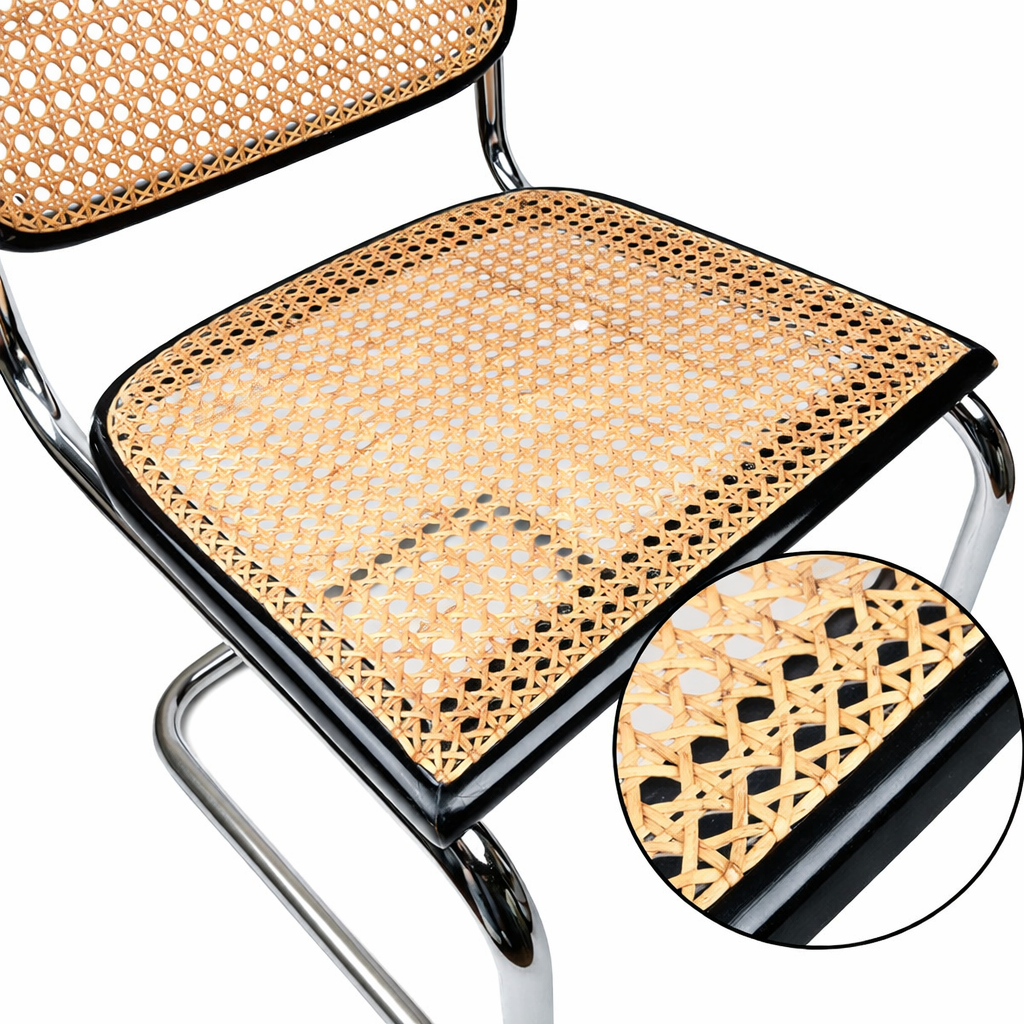

Transition to Machine Cane (Mid-20th Century)
During the WWII era, manufacturers began transitioning from hand cane to machine cane, as it was faster, cleaner, and more cost-effective to produce. Machine cane (also known as pressed cane) uses pre-woven cane sheets rather than individually woven strands. The sheet is pressed into a routed groove and secured with a spline, eliminating the need for the traditional seven-step hand-weaving process.
By the early 1960s, Italian manufacturer Gavina acquired the production rights for the Cesca chair. Gavina utilized both the machine-cane method and a hybrid technique, in which the center section used pressed cane while the perimeter was finished with hand-laced binder cane. This approach recreated the visual appearance of traditional hand caning without requiring every strand to be woven individually.
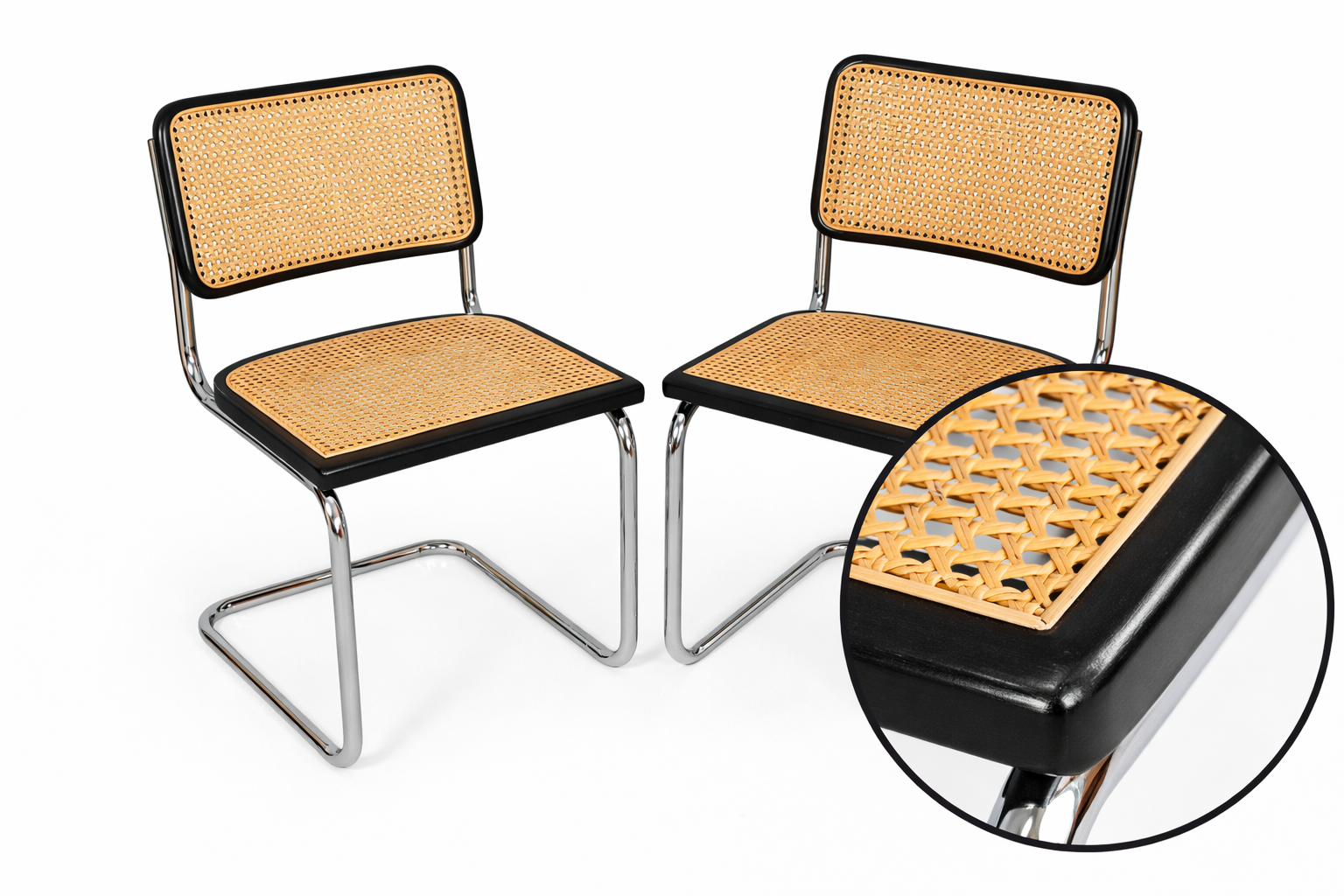

Knoll Production (1968-Current)
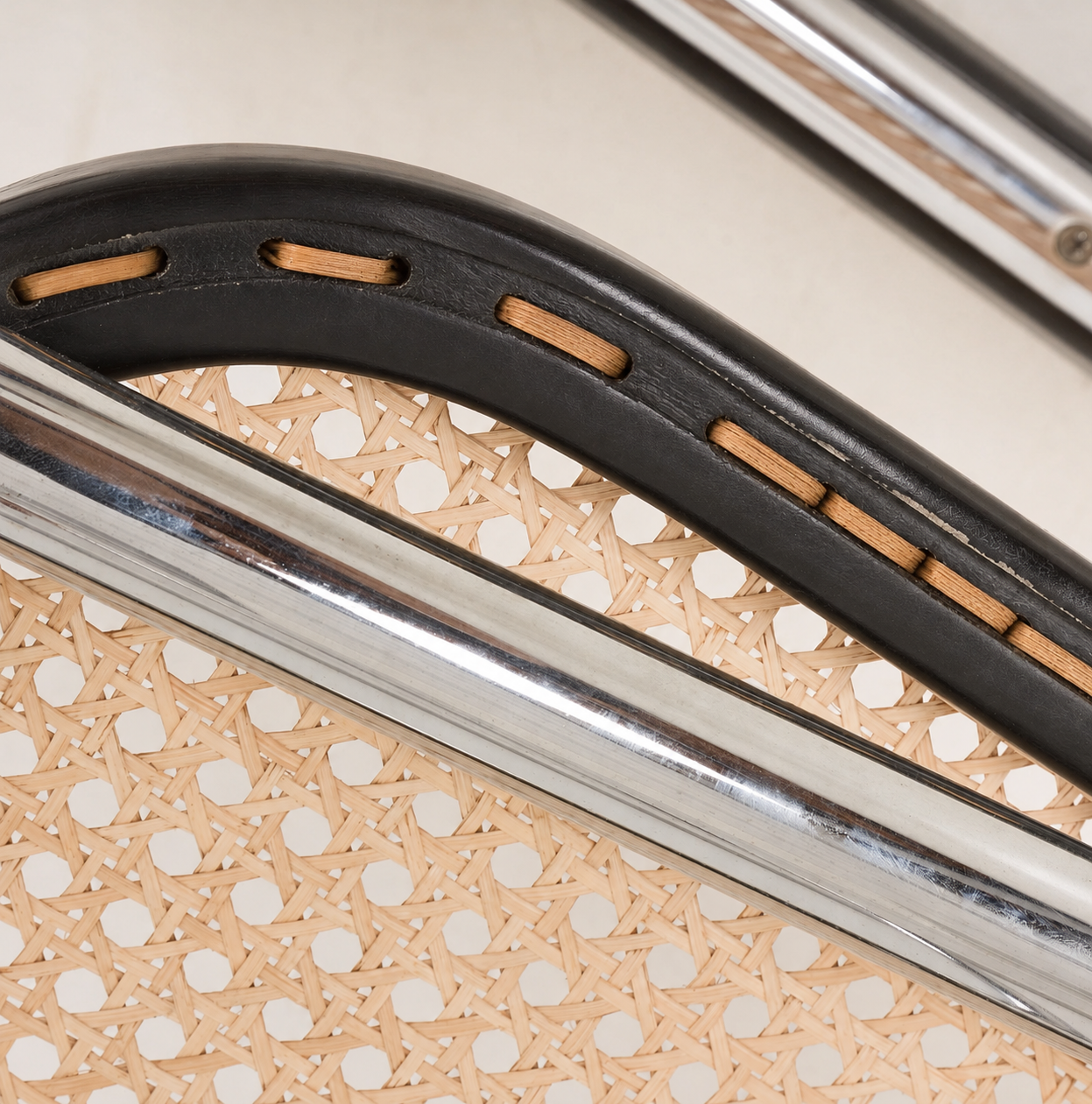
When Knoll began producing the Cesca Chair in 1968, most chairs featured machine-woven cane secured with a spline along the perimeter. More recently, Knoll has reintroduced the laced-in detail, hand-tying the cane along the edges to replicate the look of traditional hand caning. This approach is often referred to as the hybrid cane method, as it combines machine cane sheets with the traditional hand cane edges. The underside of the chair is much neater than the traditional hand cane, as we don't see the messy knots.
Did you know
The Cesca chair was named after Marcel Breuer’s daughter, Francesca.
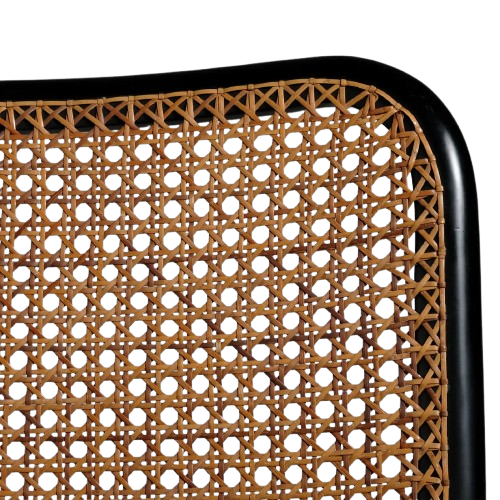
Blind-cane laced with no visible holes on the outside-back
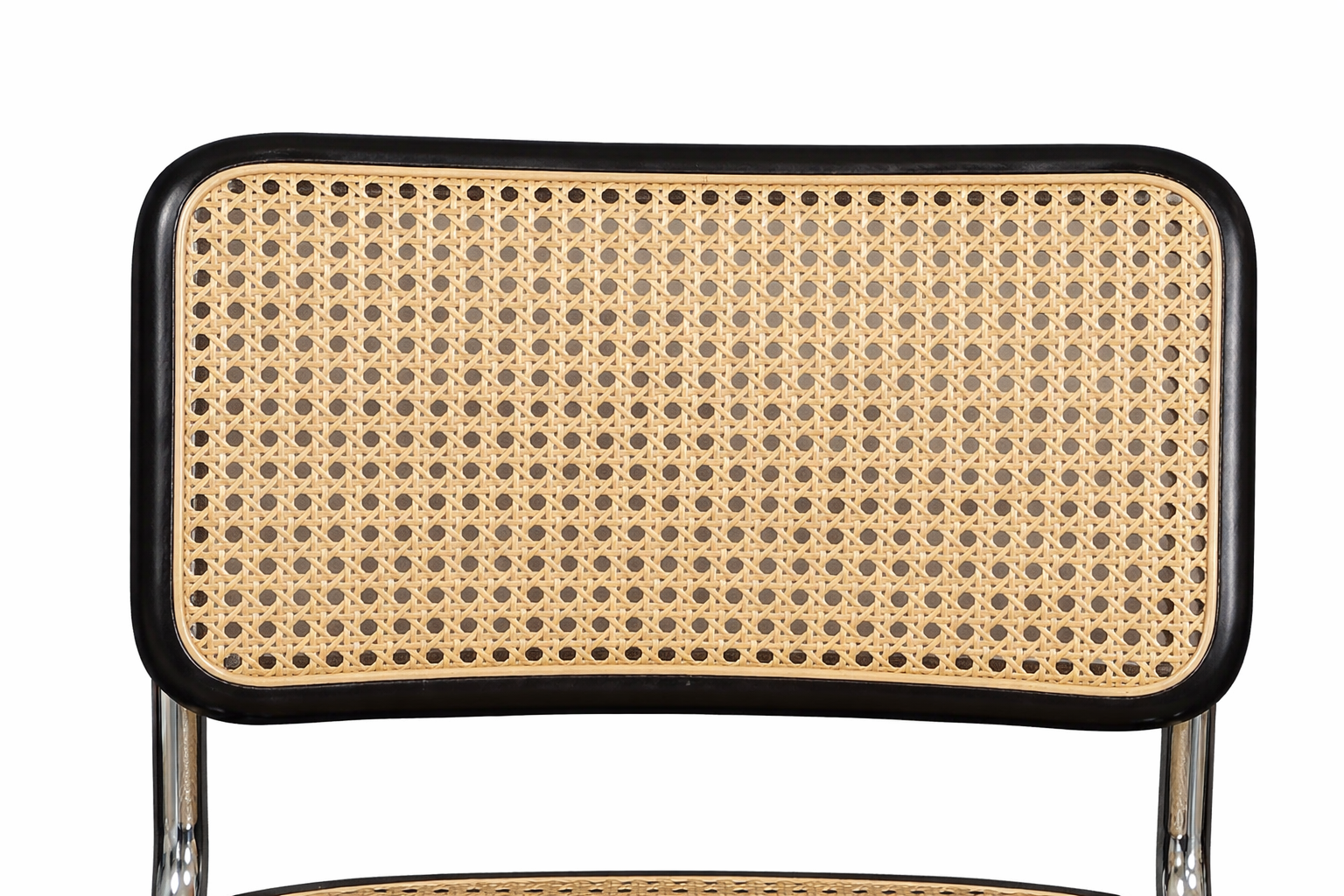
Quick way to tell the cane method
Hand cane → visible holes around the perimeter of frame, usually messy back side
Laced-in cane → smaller holes around the perimeter, neater back side
Machine cane → smooth groove with a spline, no holes on back side
I like to think that my work has not been a ‘style,’ but rather an attitude.
— Marcel Breuer
Ready to restore this piece?
Get a free estimate for restoring your Cesca Chair (B32). Upload photos and receive an estimate range.